 What attracted you to the cause of population and the environment?
One of the most profound experiences of my life occurred in the Appalachian hills around Athens, Ohio – the site of Ohio University. I was hiking in the woods and came across an abandoned coal mine. I went in a few feet, but it was quite dark and, frankly, scary. There was a small stream flowing out of the mine so I followed it. The water in the stream was a red orange color and no plant life was living along the creek bed, which I assumed was due to the high acidity from the sulfur in the coal. After a short while, the stream flowed into a larger stream, and the effect was stunning. Upstream from the juncture was lush with plant life and insects; downstream was dead. No plants, no insects, and no life at all.
No speaker, no book, no article could ever have as much impact on me as that moment. To this day, I still get emotional about this experience. I have tried my whole life to remember that scene and to try and dedicate myself to protecting our environment. My support for Population Connection is an important part of that commitment.
Tell us a little about yourself?
I grew up in Cleveland, Ohio and attended Ohio University where I received a bachelor’s degree in General Studies. Next, I attended Case Western Reserve University where I received a BA in Nursing. I worked as a psychiatric nurse for about 20 years. After nursing, I returned to school and attended Kent State University where I received a master’s degree in Economics and then a doctorate in Business Administration. I taught economics, finance, statistics, and nursing at a small college for about 24 years until retirement in 2016.
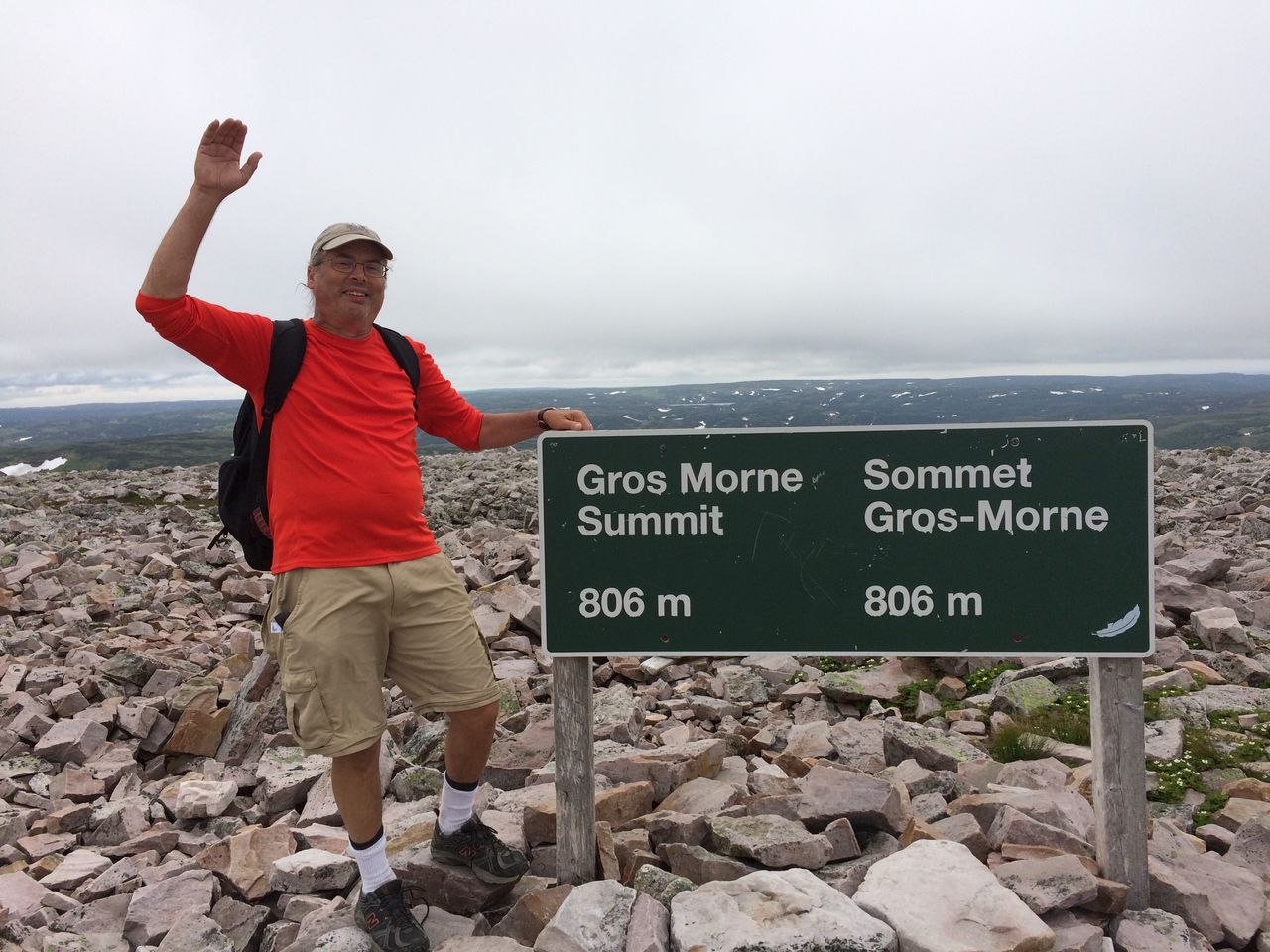
I enjoy spending time with my wife, Peggy, and my family, including watching the grandchildren. I also like to garden, play golf, bike, hike, and watch movies. We love to travel and some of my favorite trips were to the Canadian Rockies, the Maritime Provinces of Canada, and Morocco.
Were you aware and/or involved with advocacy issues before you joined Population Connection?
I became politically active in college and have tried to remain so since. I was elected twice to the local school board and served for 8 years. I have worked on a number of political campaigns and been involved in various community groups over the years.
Why do you support Population Connection?
I became aware of the population connection in 1970 when I took part in the first Earth Day. I was a freshman at Ohio University, and as a sign of our support for the environment, we wore red armbands. Things were different then.
Our planet is only capable of sustainably supporting a limited number of people. That is not an opinion; it is a fact. We could argue about what that number of people would be, but there is definitely a limit. I taught college-level economics for over 20 years and would often use the example of wild-caught salmon: Some people believe that wild-caught salmon is superior to farm-raised salmon and, therefore, the only kind that they should eat; however, you then need to ask yourself, “Just how much wild salmon can we sustainably harvest? And how many people can we sustainably feed?”
What role does Population Connection play?
Personally, I believe that Population Connection is the only organization that presents an explanation of why bigger is not necessarily better and that a stable, or even smaller, population might be the best thing for the planet. Many articles about the supposed dangers of a declining population suggest that the biggest threats are not enough workers and not enough social security collected. I would offer that more productive labor can produce more wealth than unskilled labor and solve any labor shortage. You can have more goods and services (GDP) per person by either having a bigger economy or by having the same size economy and fewer people needing to consume it. Growth can be achieved if we define growth as better, more sustainable products and services.
In conversations with many people over the years, I have discovered that most have never heard of an alternative to “more is better.” Less can also be better and is usually much, much better for the planet. As a society we have to evolve in a way that minimizes our environmental impact and begins to repair the damage already done. This will require a significant change in values for many people.
Tell me about the decision to include Population Connection in your estate plans?
Many people my age are afraid of not having enough money for retirement and becoming a burden on their children and family. They also care about social causes and want to leave a legacy to those organizations. A Charitable Gift Annuity using my IRA QCD (qualified charitable distribution) allowed me to provide for my retirement and donate to one of my favorite nonprofits. I used a transfer from my IRA and did not incur any tax liability by staying within the limit set by Congress.* I also met my required minimum distribution (RMD). I will receive a flow of income for as long as I live and when I die, I know Population Connection will receive the funds that remain. I am able to provide for my retirement and leave a legacy.
*A special one-time transfer of up to $50,000 per person may be made from a traditional IRA to establish a Charitable Gift Annuity with Population Connection.
We appreciate Rob’s investment in our work and his long-term commitment to global population stabilization. It is an honor to count Rob as a member of our ZPG Society! If you’re interested in learning how you can establish a charitable gift annuity, give through your IRA, or include a gift to Population Connection in your will or trust, please contact us at legacy@popconnect.org.