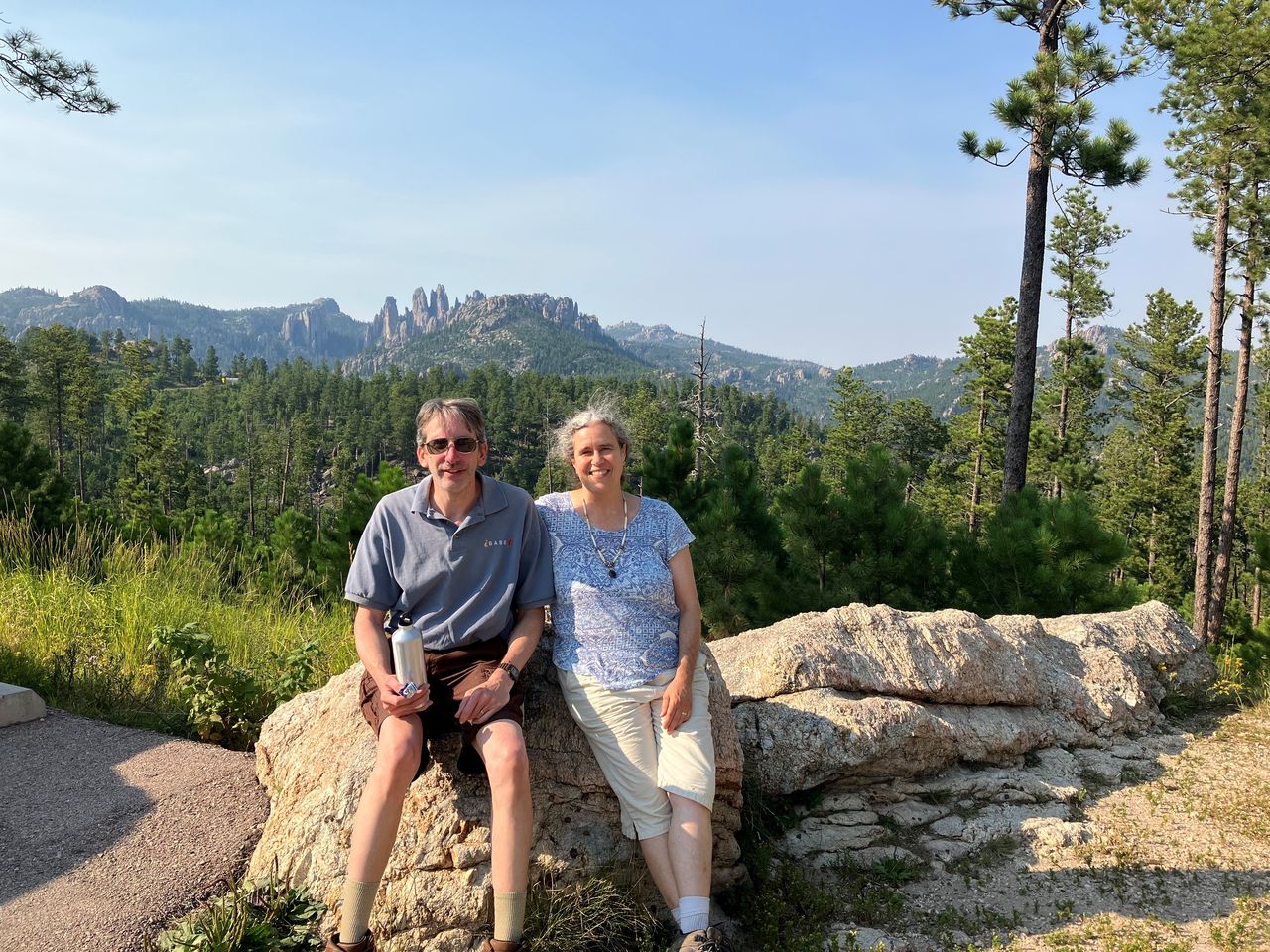
Rebecca Weiner joined Population Connection in 2019, but she was introduced to our organization as a child by her mother, who was a member in the ’70s, when we were known as Zero Population Growth, or ZPG. Rebecca loves the way Population Connection “makes the connection” between individual family planning choices, the economy, the environment, and everything else: “The personal truly IS political!”
Rebecca grew up on a farm in Upstate New York, outside of Rochester. In high school, she discovered the works of Barry Commoner, Joan Dye Gussow, Rachel Carson, and Paul Ehrlich, which helped shape her own views on environmentalism and the impacts of population growth. She received her Bachelor’s in history, with a focus on modern Chinese history, from Yale University. After college, Rebecca worked as an interpreter before moving to China as a teacher in 1987.She worked in various jobs in China for 12 of the next 15 years.
After moving, she recalled “Coming to grips with the enormity of China's population and the significant environmental impact that followed economic development, as well as with the horrors caused by the coercive one-child policy.” She left China temporarily after Tiananmen Square and the tragic loss of one of her students. “That experience reinforced my love of my own country and of rule of law,” she said.
In her spare time, Rebecca loves to read and participates in Population Connection’s Page Turners book club. She also enjoys hiking, biking, swimming, and dancing as well as film, theater, and music. Rebecca and her husband, Mike, also enjoy traveling, which they try to do thoughtfully in terms of their carbon footprint.
Rebecca also volunteers for Planned Parenthood. She believes intentional decision-making about family size, supported by voluntary programs ensuring access to the full range of modern family planning, is the best tool for addressing everything from overpopulation and child welfare to climate change.
“Everyone has the right to make their own decisions about something as deeply personal as family size,” she said, “but these decisions are not made in a vacuum.”
“Ensuring easy access to voluntary family planning services is the bare minimum to help prevent the linked scourges of unwanted pregnancies and childhood poverty.” She went on to say: “We must also ensure young people have information about the many benefits—health, family, personal economics— of waiting to have children.”
Rebecca and Mike have one child who is biologically theirs, and have also been licensed foster parents. Over the years they cared for and helped raise several children. To Rebecca, loving kids and families goes hand-in-hand with supporting family planning. She also noted that waiting until her late 30s to have a child, and stopping at one, gave her freedom and flexibility in life—and allowed her to support causes like Population Connection. “Emphasizing the personal benefits of family planning may be the most effective tool in ending rapid population growth,” she said.
“Including a gift to Population Connection in my will was a natural choice, given my values,” she mentioned. “My legacy gift is a powerful way to help ensure my grandkids, great nieces and nephews, and all creatures great and small can still enjoy a healthy life on this planet for years to come.”
By including Population Connection in her estate plans, Rebecca chose to invest in the future and carry on this essential work until we finally achieve our goal: A people and planet in balance.
Despite everything happening in the world today, Rebecca remains hopeful: “I am confident the current plague of populist strong-men and science deniers will flame out and pass, the rule of law will hold, and we will collectively keep muddling through—and making things better. Many women and others awakened by the loss of Roe are already helping turn the tide.”
“After all,” she added, “making the ‘Population Connection’ is one hugely important way to help bridge to that better future.”