
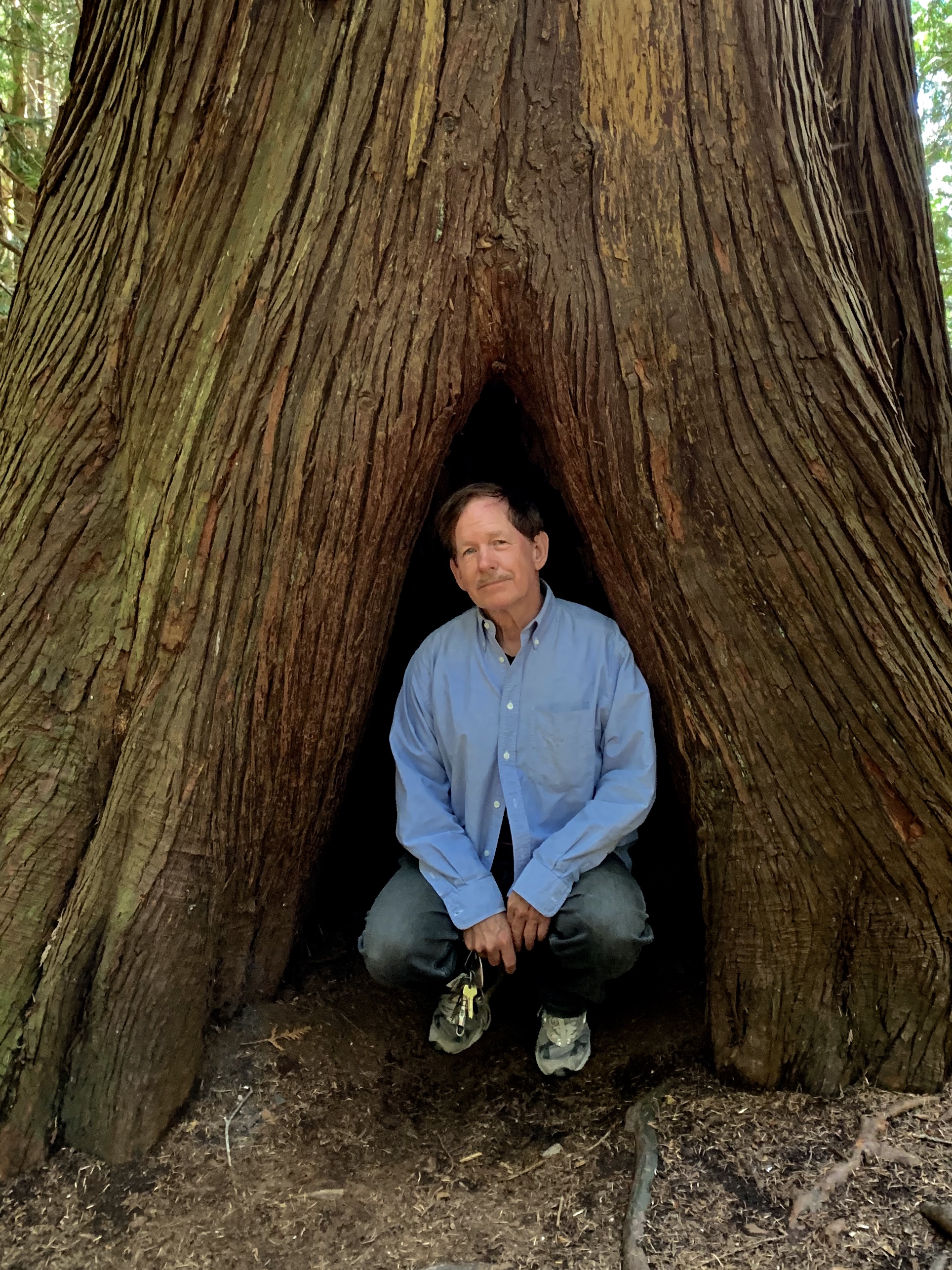
 ZPG Society member James O’Callaghan, Ph.D., can hardly remember when he first started supporting Population Connection, then Zero Population Growth or ZPG: “I think it was in college in the late ‘60s and early ‘70s, when I took ecology courses and had a series of lectures on population biology at Purdue. Paul Ehrlich must have influenced me then.” Population issues and the negative impact of overpopulation on the planet have been at the forefront of his mind for decades. From a young age, he knew he did not want to contribute to the population and had a vasectomy at 22-years-old. He attended a couple of ZPG meetings when he lived in New York City in the late ‘70s – and he has been fully dedicated to the cause ever since.
Jim grew up in West Palm Beach, Florida. “Unfortunately, close to Mar-a-Lago,” he notes, “which, thankfully, didn’t mean as much back in the day.” Jim went on to earn his B.S. in Biology from Purdue University, then a Ph.D. in Neuropharmacology from Emory University. “Neuropharmacology was one of the disciplines that became a component of neuroscience…the new kid on the block in the late ‘70s,” Jim explains.
With his Ph.D. in hand, Jim worked more than 15 years at the U.S. Environmental Protection Agency (EPA) in North Carolina. His work expanded the field of neurotoxicology by seeking to identify neurotoxic compounds that could lead to long-term illness and disease. In 1997, Jim received an offer to head a new molecular Neurotoxicology Laboratory at the U.S. Centers for Disease Control and Prevention’s National Institute for Occupational Safety and Health. This career shift moved Jim and his wife to Morgantown, West Virginia, where the new lab was based. Jim’s work at both the EPA and NIH cemented his view on the need for lowering the human carbon footprint, increasing access to family health services, and a better understanding of the negative environmental impact of rapid population growth.
Jim’s collaborations on disparate neurotoxicants produced influential contributions to the field of neuroscience, including Nobel Prize winning research on signaling in dopamine-releasing neurons as well as novel methodologies for assessing cell type–specific gene expression. Throughout his career, Jim was a prolific publisher and presenter with more than 250 peer-reviewed publications. When not working, Jim traveled extensively with his wife. One of their favorite places to visit was New Zealand for its astounding nature and scenery. However, Jim says his focus was mostly on being a scientist: “Science does not leave a lot of time for hobbies because it is our hobby!”
When it comes to addressing rapid population growth, he wishes he could “turn back the clock” to the beginning of the movement, so more people could recognize what overpopulation does to the planet and the well-being of humankind. Jim remembers how eye opening a visit to India was in the early ‘90s, when he saw the impacts of population growth on communities there. He believes we need to better demonstrate the impact overpopulation can have on everyday lives. “The resources of our planet are not endless and now, not later, is the time to do something about it.” He remembers when overpopulation was a dominant theme in the late ‘70s and hopes there is a way to rekindle that discussion on a wider scale today.
Asked about his decision to include a legacy gift to Population Connection, Jim replies, “If you don’t recognize the overarching, long-term negative effect of overpopulation, whatever you are concerned about is secondary to that fact and does not matter.” Overall, Jim wants people to become more aware of the consequences of overpopulation on humanity and the environment.
He chose to invest in the future by creating a legacy gift to Population Connection, acknowledging how our efforts to stabilize population will continue for generations. By including Population Connection in his legacy plans, Jim will help achieve our goal: a people and planet in balance.
Here at Population Connection, we’re grateful for Jim’s incredible support and we’re glad to count him as a member of our ZPG Society. To find out how you can leave a legacy for Population Connection and join our ZPG Society—a far-sighted group of individuals who are fostering a sustainable future—please contact us!